

Farmers in the cotton growing belts of Maharashtra have been in a destructive seasonal dilemma for generations. Every year after harvest, millions of tons of woody cotton stalks clog the fields. Short-term non-decomposable residues, presenting an immediate obstacle to subsequent cultivation, are traditionally burnt in open fields, a practice which wastes valuable organic matter, severely damages the soil micro-ecology and fills rural air with toxic smog.
But a progressive startup in Amravati believes there’s a better way to turn agricultural liability into economic assets with clean tech and circular economics.
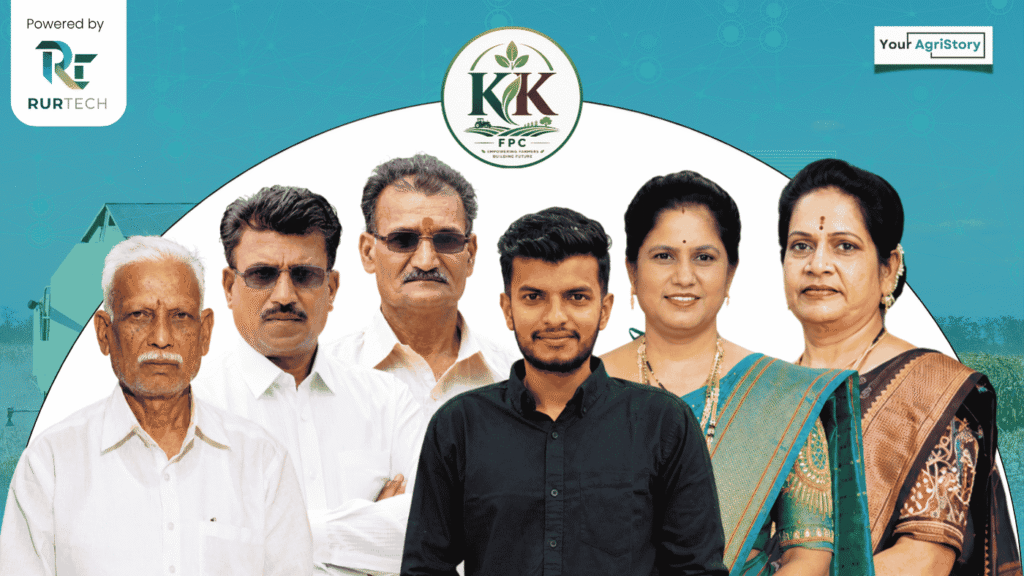
Krushi Kirtimala Farmer Producer Company Ltd. (K.K. FPC) is a 2023 founded company by Tejas Bayaskar in Narsingpur, Daryapur, that is leading a farmer-led climate-smart movement that converts high-value regenerative products made from discarded farm waste. The venture is supported by a dedicated leadership team including Vice Chairman – Dadarao Bayaskar, Chairman – Vishwash Bayaskar, Secretary – Vinayak Bayaskar, and Board Directors – Kiran Thakare and Archana Thakare, and is actively working towards rebuilding soil health and lifting rural incomes.
What is the Cotton Stalk Biochar Project?
What started as a localized effort to solve field burning has become a full-blown agricultural solution!
K.K. FPC’s premier innovation is its Cotton Stalk Biochar Project, a system that removes cotton stalks from open fires and transfers them to high temperature, low oxygen thermal processing units (pyrolysis).
“When people look at agricultural waste, we see opportunity. Every cotton plant counts. “Every farmer deserves innovation,” says Founder & CEO Tejas Bayaskar. “Our mission is to convert waste into wealth, and improve soil health, reduce cultivation costs, and create a sustainable future for agriculture.” Told the K.K FPC’s Founders to the YourAgristory in exclusive interview.
The resulting product is biochar, a porous, carbon-rich soil conditioner that acts as a permanent, thousand-year carbon sink. When incorporated back into fields, biochar drastically increases Soil Organic Carbon (SOC), boosts water-holding capacity, and optimizes fertilizer absorption. Farmers reliance on expensive chemical fertilizers are reduced by restoring the natural soil structure.
Expansion of the Climate- Smart Agriculture
Through the alternate Wetting and Drying (AWD) Rice Project, K.K FPC has expanded its path, beyond biochar.
Traditional rice farming dependent on the continuous flooding, depletion of the groundwater and releasing of large amounts of anaerobic methane.
By introducing controlled drying intervals monitored by simple water gauges, K.K. FPC has scaled AWD across 2,000 hectares of rice fields. The intervention cuts irrigation water use by 25–30%, reduces methane emissions and cuts diesel and electricity pumping costs for farmers by around ₹2,000 per hectare.
Real-World Footprint & Future Roadmap
In a short time, K.K. FPC has shown that you can be an environmental steward and make money at the same time:
- 1,800+ farmers actively connect
- Produced 289+ tons of agricultural biochar.
- 48 direct & indirect rural jobs created in processing, transport and tech supervision.
- Annual Financial Turnover Rs. 73 Lakhs.
The enterprise keeps the entire processing chain within the local rural clusters so that the economic value and environmental benefits directly stay within the community.
Roadmap of K.K FPC’s
K.K. FPC’s 2030 roadmap involves increasing high capacity carbonization kilns throughout Maharashtra, increasing AWD footprint, launching nutrient-enriched biochar blends for horticulture and connecting smallholders to global carbon credit markets.
Krushi Kirtimala FPC is a compelling blueprint for India’s regenerative agricultural future: “From Waste to Wealth,