


A quiet revolution is underway in the silent corridors of rural India. Urban startups may be chasing the next consumer app, but thousands of Farmer Producer Organizations (FPOs) and small rural agribusinesses are battling a digital divide that threatens their very existence. Despite their great potential, these organizations have too often remained invisible to formal markets, banking systems and investors, forced to use fragmented, manual processes for accounting, compliance and trade.
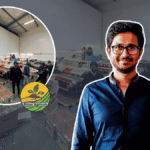
Enter Finnid Infotech, a Lucknow-based venture founded by Ram Shankar Shauresh Parijatam, which is bridging this gap by turning grassroots farmer groups into scaleable, professional enterprises.
The Turning Point: Vision from the Realities of the Field
Ram Shankar’s story began long before the Finnid project started. He was a student of Chartered Accountancy and he saw a huge gap where large corporations were able to scale with ease with the help of powerful ERP (Enterprise Resource Planning) systems and SMEs and rural FPOs were left out, side-lined by the high costs and complex architecture of these tools.
Ram, a CA who qualified in 2016, spent years researching the concept to build a solution that didn’t need a corporate office to run. The real impetus came in 2020 with the ambitious mission of the Government of India to promote 10,000 FPOs.
“We saw the rise of thousands of new producer companies across the country,” “The farmers, the produce, they had the ambition, but they didn’t have the operational backbone to scale sustainably. Most were still keeping their records in physical notebooks or in disconnected spreadsheets. “We knew that if we didn’t solve the operational inefficiency, the FPO model was going to be hard to survive long-term,” Ram says to YourAgristory.
“Finnid” Edge Simplicity as a Service
Finnid did not grow up in the glass-walled office of a traditional software company. Ram and his team worked directly with FPOs for years, training board members and farmers to go from Paper-FPO to Real-FPO
“We didn’t want to build software that requires a PhD to operate,” says Ram. “Rural India doesn’t need another fancy dashboard. They need tools that are embedded in their existing life.”
Finnid’s innovation is a multi-lingual, WhatsApp native ecosystem. By adding WhatsApp based workflows, Finnid’s photo-enabled accounting and bank-ready compliance systems let farmers and board members manage procurement, inventory and sales without needing to understand complex software jargon. The platform provides a bridge connecting the fragmented worlds of agriculture, trade and finance into one cohesive digital infrastructure.
Solving the Bankability Crisis
Most FPOs are constrained by a lack of formal credit to scale up. Banks are often unwilling to lend to groups with opaque financial records or a poor compliance history.
Finnid changes the equation!
“We are helping farmer groups to operate as organized corporate bodies,” says Ram. With automated compliance and bank-ready financial reports, we’re not just delivering software, we’re creating institutional trust. When an FPO comes to a bank with a Finnid-generated, report, they are no longer a farmer group, they are a credit-ready business.”
Recognition and Future Consequences
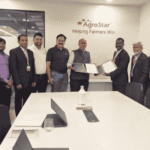
Finnid’s bottom-up approach has not gone unnoticed. Startup Finnid has got incubation support under PUSA KRISHI/RAFTAAR, IIT BHU and has been approved as an ERP provider by Small Farmers Agri-Business Consortium (SFAC) recognised by DPIIT. Its platform is very much in tune with the national priorities of Digital India, Agri-Stack and ONDC and is a major player in the nation’s agricultural transformation.
What’s more? Finnid is ready to deploy JV model with NBFC-AFCs, paving way for rural organizations to access formal markets with newfound confidence.
Note from the Founder
Ram Shankar is looking down the road ahead, but he is still driven by the change he sees in the field everyday!
“We didn’t choose this path because it was easy. We chose it because it was necessary. The biggest innovation in rural India won’t come from replacing the farmer’s knowledge with technology. It will come from supporting that knowledge with the right tools. When a group of farmers can track their profits in real time, participate in fair markets, and access the funding they deserve, that is not just business success. It is the digital empowerment of Indian agriculture. We are just beginning to transform these fragmented groups into the foundation of a modern, financially strong rural economy”