

Seven years… and then suddenly one night everything changes. Sounds filmy, but that’s literally what happened with DailyGurus.
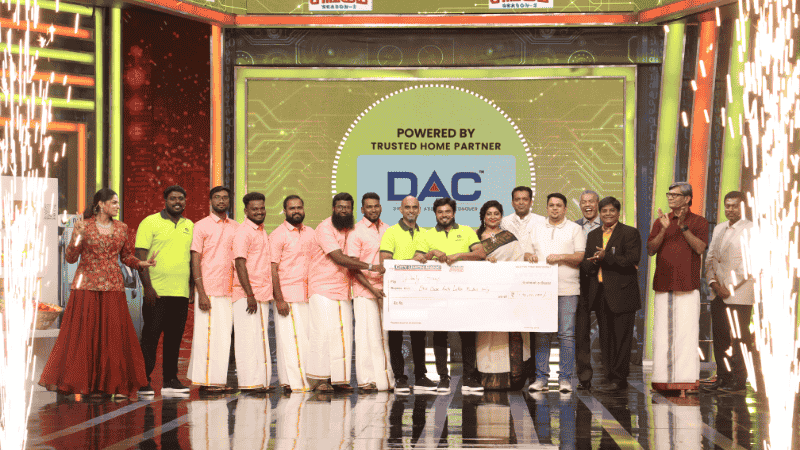
On January 25, 2026, on Startup Singam on Star Vijay, Rajesh Muralikrishnan and Gnanashekaran C N finally heard what they’d been waiting for all this time. Not appreciation, not “good idea” — actual money. ₹1.9 crore. From Enlighten Capital, Shobittam Group, MGM Investments, and Sidd Ahmed of Vdart Group. Pre-money valuation? ₹50 crore.
And honestly… After seven years of being ignored, that kind of moment hits differently.
They didn’t start with anything fancy. No big tech, no hype words. Just a simple idea back in 2019 — why are farmers earning less and customers still not getting fresh produce? So they tried to fix that. Direct from farm to home. That was it. South Chennai, small areas like Perumbakkam and Velachery, around 2,000 households… slow but real growth.
Then 2020 came. Pandemic. And boom — that entire model just collapsed. Like overnight.
Most people would pause. Or wait. Or shut down. But they didn’t. They shifted to B2B. Started supplying to brands like Subway and Meat and Eat. And this wasn’t easy. B2B means consistency, quality, timing — no excuses. Margins are tighter too. But it’s stable. And that’s what they needed.
By 2022, they weren’t small anymore. Around 75+ clients. Names like Eversub India and Kailash Parbat. But the real thing — the backbone — was their contract farming model. Fixed pricing based on actual cost. Guaranteed buyback. That one thing solves so much stress for farmers. Like, finally some predictability.
Then they did something unexpected in 2024. They added blockchain.
Yeah, it sounds heavy. But what they actually did was simple — scan a QR code, and you can trace your vegetables back to the farm, the harvest date, even who packed it. That level of transparency is rare, especially in fresh produce. Gnanashekaran even presented this at Kerala Blockchain Academy, which is not where you usually see agri founders.
That same year, they partnered with big distribution players — Reliance Retail, Swiggy Instamart, Zepto, and Blinkit. At the same time, they opened collection centres in Kotagiri and Malur — where grading, verification, and farmer payments all happen on-site. Not delayed. Not complicated. Direct.
And 2025… that’s where things really scaled. Around 10x growth. Quietly.
They also got a ₹12.5 lakh grant from RIIDL SoilBox Program, selected from 100+ applicants. Plus recognition from the Tamil Nadu government. But honestly, one of the most real impacts — more than 20 rural women now working in grading and packaging, earning up to ₹90,000 a year. That matters.
Rajesh said something that kind of sums everything up. Not fancy, just real. They kept showing up. Every single day. Even when no one cared. Investors said no, the ecosystem ignored them… but they didn’t stop.
And that’s why this moment on Startup Singam feels earned. Not lucky.
The show itself is getting big — 2,000+ applications, ₹100 crore committed across 75 startups this season. But what makes it interesting is startups like this. Not glamorous. Not hype-driven. Just… built properly.
Now with this funding, they’re planning expansion — Coimbatore, Bengaluru, Cochin, Hyderabad. Same model everywhere. Collection centres, direct farmer payments, traceability, and B2B relationships built slowly. Not by burning money.
Of course, competition is there. WayCool and FarMart came earlier, raised more, and scaled faster. But DailyGurus has something different. Seven years of doing things the hard way. That builds trust. With farmers. With buyers. With the system itself.
Now the real question is — can that trust scale?
Because building something slowly is one thing… Scaling it without breaking it is a whole different game.