

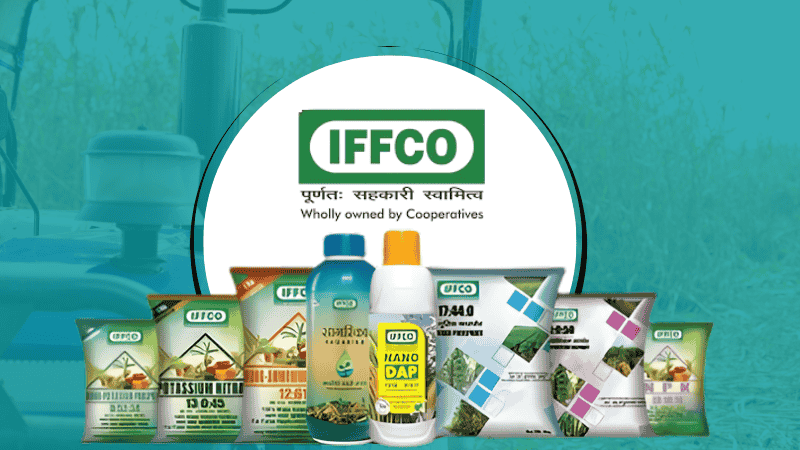

IFFCO started in 1967 with 57 cooperatives. That’s it. No big plants, no technology, just 57 member societies deciding to do something together. Fast forward to now — 36,000+ cooperative societies, 5.5 crore farmers, plants in Gujarat, Uttar Pradesh, and Odisha. The Paradeep plant alone is one of the largest DAP facilities in the world, and it got there because a cooperative took over a private sector asset. That doesn’t happen often and it doesn’t get talked about enough.
And it’s not just fertiliser anymore. IFFCO-Tokio for insurance. IFFCO Kisan for rural telecom. IFFDC for forestry. At some point it quietly became something much bigger than what it started as. That’s the context you need before reading anything else here, because without it, April 4, 2026 just sounds like another earnings day.
58 Years to Get Here:
IFFCO posted a Profit Before Tax of ₹4,106 crore for FY 2024–25. Highest ever. Chairman Dileep Sanghani said it was a milestone not just for IFFCO but for the Indian cooperative movement — and honestly, coming from this institution, that line carries actual weight.
But the number alone isn’t the story. Look at the three years behind it. FY 2022–23 was ₹2,443 crore PAT. Then ₹3,811 crore PBT. Now ₹4,106 crore. Every year, up. That kind of run doesn’t happen by chance — something has been working inside this organisation for a while and it’s worth paying attention to.
The Production Side:
Total production this year: 90.62 lakh metric tonnes. 48.28 lakh MT of urea, 42.34 lakh MT of NPK, DAP, and water-soluble fertilisers. Dispatches crossed 119.68 lakh MT. Conventional fertiliser sales hit 118.75 lakh MT. Records pretty much everywhere you look.
The part that stood out, though — Phulpur, Aonla, and Paradeep all hit their highest-ever output in the same year. Same year, all three, at the same time. These are plants in different states, making different products, dealing with different challenges. Getting all three to peak simultaneously is genuinely hard to pull off. It’s the kind of operational detail that gets lost in earnings coverage but probably shouldn’t.
Urea and DAP demand just keeps growing, and IFFCO is right at the centre of it. At this point it’s not really optional infrastructure for India’s food system. It basically is the infrastructure.
The Nano Numbers:
221 lakh bottles of Nano Urea Plus. 64.89 lakh bottles of Nano DAP. 30.1 lakh bottles in overall nano sales. These aren’t pilot numbers or government showcase figures. Farmers are actually buying this stuff, regularly, without being pushed into it, and the scale of adoption moved faster than most people expected.
The nano range — Urea Plus, DAP, Zinc, Copper, Dharamrut — is built around getting nutrients directly to plant cells, cutting down on how much conventional fertiliser needs to go into the soil. Whether that holds up fully at mass scale is still an open question, but the buying behavior suggests farmers are finding it useful.
Two new products also launched this year — Nano NPK Liquid (8-8-10) and Nano NPK Granular (20-10-10). Apparently among the first of their kind globally. A new plant in Devanahalli, Bengaluru brings total capacity to around 9.5 lakh bottles per day. This stopped being a side project some time ago. It’s a core direction now.
Why the Profit Number Means Something Different Here:
This is the bit that tends to get skipped over and it really shouldn’t be.
When a listed company posts ₹4,106 crore profit, the money goes outward — to shareholders, to funds, out of agriculture. When IFFCO posts it, the money stays inside cooperative societies. Which belong to farmers. The same farmers buying the fertiliser and depending on this institution every season. Same number, completely different situation. And that’s not a small thing — that difference is literally why IFFCO was set up in the first place.
MD K.J. Patel and the leadership have held that original logic together while also running something far bigger and more complex than what existed in 1967. That’s not easy to do.
What’s Next:
FY 2026–27 focus is on pushing nano fertilizers further into mainstream use, organic farming, soil health, and more global tie-ups — all feeding into the Viksit Bharat @ 2047 direction. Though IFFCO has been doing this kind of rural development work long before that framing existed.
₹4,106 crore got it into the headlines. But a farmer-owned institution, running at this scale, staying consistent, moving into new technology while still covering basic input needs for 5.5 crore farmers — that’s what’s actually happening here. The profit just made it easier to see.